Exoplanets and life in the universe Astrobiology and habitability
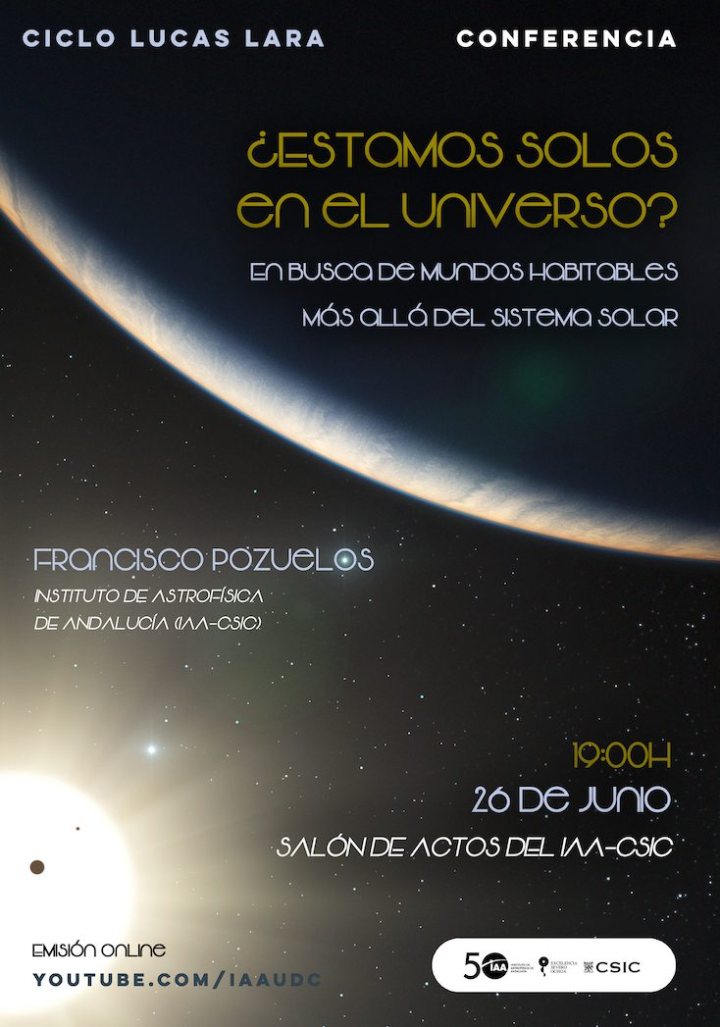
Are we alone in the universe? In search of habitable worlds beyond the Solar System
Francisco Pozuelos Institute of Astrophysics of Andalusia
The video loads from YouTube (privacy-enhanced mode) only when you press play.
About the lecture
Since the discovery of the first exoplanet in 1995, the search for worlds beyond our Solar System has become one of the most fascinating and dynamic areas of modern astrophysics. In less than three decades we have gone from knowing only the eight planets orbiting the Sun to cataloguing almost 6000 exoplanets, many so strange that they challenge our ideas about how planetary systems form and evolve.
This dizzying progress forces us to rethink some of humanity's great questions: how common are Earth-like planets? Are there worlds where life could arise? Are we really unique in the universe?
In this talk we will explore how we detect and study these distant planets, what clues they offer about their potential to host life, and review some of the most surprising and controversial results published recently. We will also present several of the projects we work on at the Institute of Astrophysics of Andalusia-CSIC (Granada), where we search for planets that could be habitable and, who knows, perhaps one day find signs of life beyond Earth.
Text of the official description published by IAA-CSIC on YouTube.